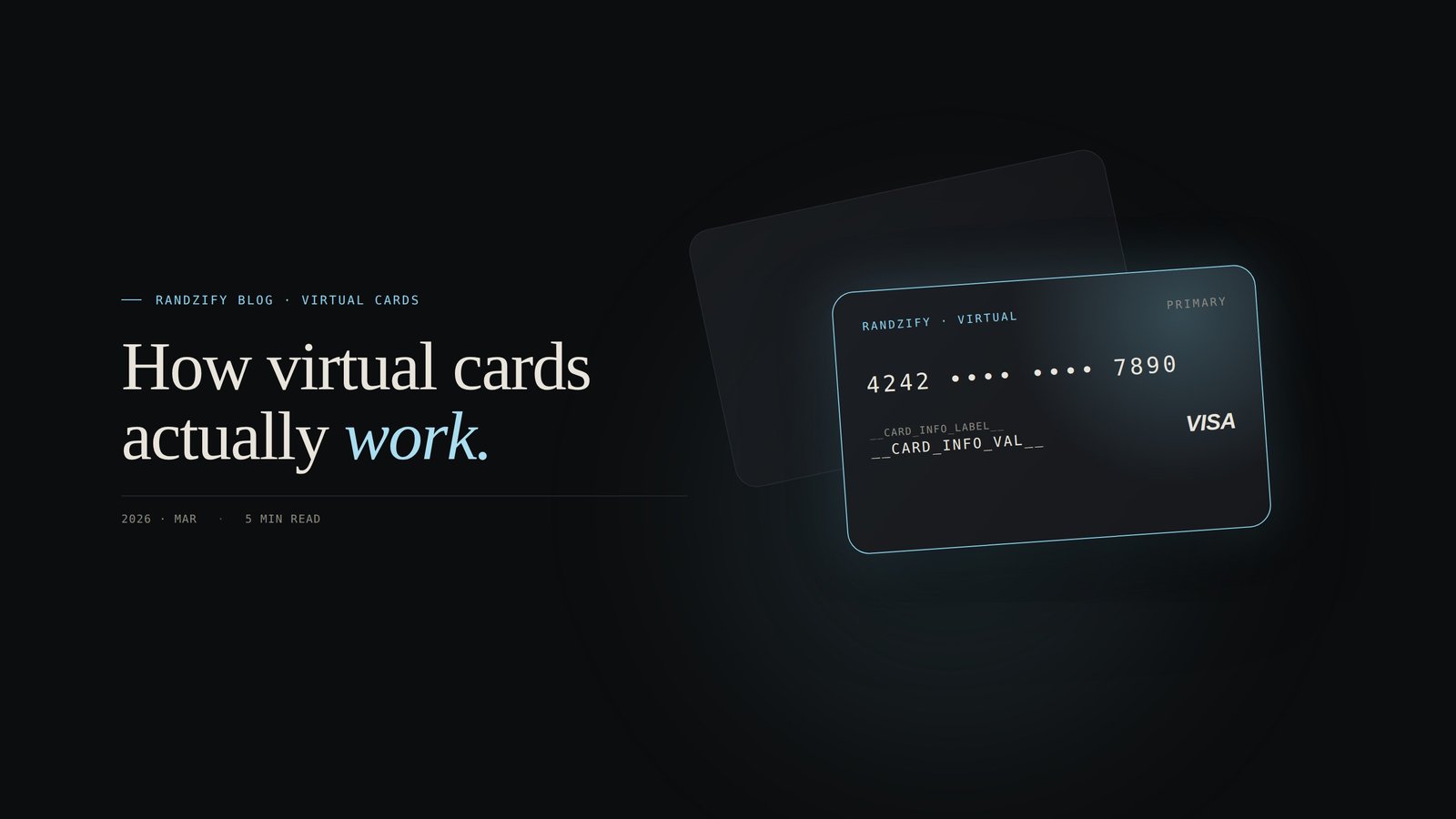
Ask most people how a virtual card works and you'll get a vague answer about "some kind of digital card." That's fair — the industry hasn't done a great job explaining it. Here's the honest version.
A virtual card is a real payment card. Same 16-digit number. Same CVV. Same expiration date. Same card network (Visa, in our case). The only difference is that it doesn't exist as a piece of plastic. It lives entirely in your wallet, ready to be spent or thrown away.
What happens when you create one
When you tap 'Create Card' in Randzify, three things happen in the background. First, we request a new card number from our issuing partner. Second, we bind it to your account with your chosen limits. Third, we surface the card details in your app — usually in under 10 seconds.
From that moment, the card is real money. You can use it anywhere Visa is accepted. Netflix, Amazon, that indie developer's Patreon, your kid's Roblox — all the same to the card.
Why they exist
Physical cards were designed for a world where you handed a card to a cashier. Virtual cards were designed for a world where you type your card number into a form. That's it. Everything else — disposability, spending caps, merchant locks — flows from that one design shift.
The card isn't the important part. Control is.
What controls come with it
Every Randzify card can be frozen, deleted, or limited on a per-card basis. You can create a card just for Netflix that will decline anywhere else. You can cap total spending. You can turn off international transactions. All of it live, all of it instant.
That's the real value. Not that the card is "virtual" — that you finally have the same control over your card that banks have had over you.